
 By
By 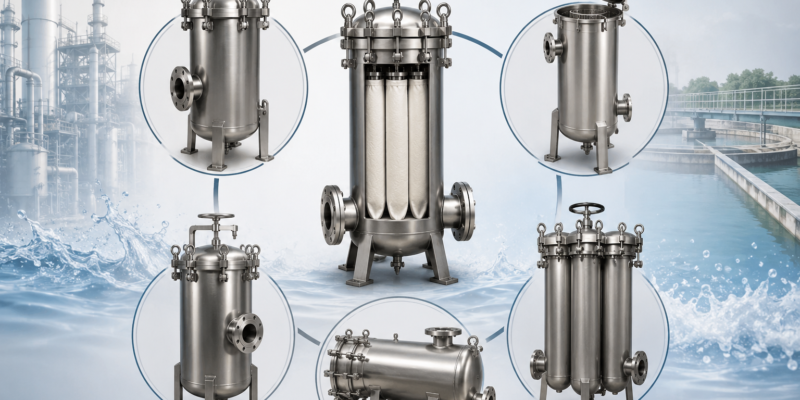
The global textile industry is undergoing a regulatory transformation. From India’s MoEFCC ZLD Mandate (2016) covering Tirupur, Surat, Ichalkaranji, Pali, and every major textile cluster, to Bangladesh’s ETP Cell enforcement at Gazipur and Narayanganj, to Vietnam’s Decree 38/2015 effluent requirements, to Turkey’s Bursa textile cluster compliance, the direction is unambiguous: textile dye effluent must meet CPCB / state PCB / national equivalent colour and TSS limits, or the plants stop running.
What separates clusters that survive these enforcement waves from clusters that face NGT closure orders, GPCB show-cause notices, and brand-association damage from international buyers (H&M, Inditex, Marks & Spencer, Walmart all maintain supplier delisting procedures.
triggered by environmental violations) is the engineering of their colour removal systems. And what determines whether those colour removal systems — Fenton oxidation, ozonation, activated carbon adsorption — actually achieve specification is the pre-filtration stage that controls TSS loading at their inlet. This article explains why a properly engineered High-Capacity Bag Filter Housing has become the global engineering standard for textile ETP colour removal pre-filtration, and why it is now one of the most defensive capital investments available to textile cluster operators.
The New Reality: ZLD and Colour Compliance Define Cluster Survival
Three forces have converged in the last five years to push textile effluent treatment from environmental department concern to boardroom-level cluster survival issue.
Force one: NGT closure orders and CPCB enforcement. Tirupur CETP has faced National Green Tribunal closure orders multiple times. Surat textile cluster operates under continuous CPCB monitoring. Pali Industrial Area has been closed and reopened repeatedly on colour compliance grounds. Once an enforcement cycle begins, the cost of being on the wrong side of CPCB documentation includes weeks of production stoppage, supplier-of-record removal from buyer programmes, and the kind of cluster reputation damage that takes years to recover.
Force two: international buyer audit programmes. H&M Sustainability Programme, Inditex Join Life supplier requirements, Marks & Spencer Plan A standards, Walmart’s Responsible Sourcing programme. The commercial consequence dwarfs the regulatory penalty for any mill supplying export markets.
Force three: ZLD economic reality. ZLD systems built around reverse osmosis are only viable when feed water TSS and colour are controlled upstream. Coloured feed to RO membranes causes rapid fouling, with membrane replacement at USD 10,000–20,000 per set and replacement intervals collapsing from 5 years to 18 months. Inadequate pre-filtration ahead of the ZLD train silently destroys ZLD economics across hundreds of textile clusters globally.
Why Generic Bag Filtration Fails on Textile ETP Service
Textile ETP service combines three constraints that defeat generic industrial bag filtration:
• Extreme TSS variability and surge loading. Textile ETPs receive batch wastewater with TSS ranging from normal operating 300 mg/L to surge events at 1,000–8,000 mg/L during vessel drain-out. Single-bag housings sized to average loading fail catastrophically during surge events. The engineered answer is high-
capacity multi-bag configurations with sufficient parallel capacity to handle 2–3× average loading without bypass.
• Variable pH chemistry. Textile effluent pH varies from 4 (acid dye batches) to 11 (reactive dye fixation rinses). Materials of construction must handle the full operating envelope. The engineered answer is SS 316L primary construction with biocide-resistant elastomer seals, validated for the actual textile pH range rather than nominal industrial chemistry.
• Fibre and lint loading. Textile effluent carries fibre fragments, lint, surfactant residue, and dye particulate — a contamination spectrum that defeats conventional polypropylene felt bags within days. The engineered answer is fibre-loading-optimised felt media with reinforced bag construction and validated changeout intervals tied to actual loading data.
Each of these failures independently halts ETP performance. Their combined effect is what produces the recurring colour compliance issues that haunt textile clusters globally.
The FCPL Solution: High-Capacity Bag Filter Housing for Colour Removal Pre-Filtration
Filter Concept is a well-known industrial filter manufacturers and exporters engineered solution for textile ETP colour removal pre-filtration is a High-Capacity Bag Filter Housing installed between the secondary clarifier and the colour removal unit (Fenton oxidation, ozonation, or activated carbon adsorption). Every design element is matched to textile ETP operating reality.
Multi-bag configuration sized to surge loading. 8, 16, 24, or 32-bag housings sized to handle 2–3× average ETP flow during surge events. Individual bags isolate for changeout while the housing carries flow — essential for continuous ETP operation under CPCB monitoring requirements that disallow bypass during changeout.
SS 316L housing matched to textile chemistry. Stainless steel 316L primary construction for full pH 4–11 operating envelope. Biocide-resistant elastomer seals (EPDM with chlorinated chemistry compatibility) for chlorine, hydrogen peroxide (Fenton), and ozone exposure during colour removal cycles. Optional PP housing variant for highly acidic effluent streams where capital cost optimisation is critical.
Engineered media selection. Polyester or PP felt bags at 5–25 micron, selected per the actual TSS and fibre loading of your ETP. FCPL Oil Adsorbing Bag Media available where surfactant and dye-oil emulsion content is significant — the single-pass TSS-and-oil capture capability that distinguishes FCPL from generic competitors. Multi-bag changeout governed by individual bank differential pressure, allowing operators to optimise changeout cost against bag inventory.
REMS-compatible monitoring. Inline differential pressure transmitters with output compatible with CPCB Real-time Effluent Monitoring System (REMS) requirements — satisfying the documentation requirements that NGT and state PCB enforcement actions
increasingly examine. The plant ETP operator receives a data trail that defends the entire treatment system in compliance audits.
FC-PDS™ specification methodology. Bag count, micron rating, and media type are specified from your actual ETP performance data — inlet TSS profile, peak flow, pH range, downstream colour removal technology, and CPCB consent thresholds. Site-specific engineering produces consistent colour removal performance that survives buyer audits.
Engineering Specifications at a Glance
| Parameter | Specification |
| Housing Material | SS 316L (standard) or PP (acid-effluent variant) |
| Filter Media (Standard) | Polyester or PP felt bags — 5 to 25 micron |
| Filter Media (Oil Service) | FCPL Oil Adsorbing Bag Media — simultaneous TSS + surfactant capture |
| Configuration | Multi-bag (8, 16, 24, 32 bag) sized to ETP surge flow demand |
| Flow Rate | 100 to 5,000 ms/day |
| Operating Pressure | Up to 10 bar |
| Operating Temperature | Ambient to 60°C continuous service |
| pH Compatibility | 4 to 11 (full textile ETP operating envelope) |
| Outlet TSS | Less than 30 mg/L (colour removal feed specification) |
| Monitoring Output | REMS-compatible DP transmitter (CPCB compliance) |
| Pressure Vessel Code | ASME Section VIII Div. 1 / PED 2014/68/EU compatible |
| Service Model | FaaS + Sustainable Filters (recycled bag inventory for ESG reporting) |
Global Standards & Regional Compliance Matrix
Textile dye effluent filtration sits at the intersection of environmental discharge permitting, ZLD compliance regulation, and international buyer sustainability audit frameworks. The FCPL High-Capacity Bag Filter Housing is engineered to international baselines with regional certifications added per destination market:
| Region / Cluster | Applicable Standards & Regulations |
| International (Universal) | ISO 14001 environmental management · ZDHC Wastewater Guidelines (Zero Discharge of Hazardous Chemicals) · OEKO-TEX STeP · Bluesign criteria · IFC EHS Guidelines for Textile Manufacturing |
| North America | EPA NPDES discharge permits · EPA Effluent Guidelines for Textile Mills (40 CFR 410) · OSHA standards · state-level textile discharge requirements |
| Europe | EU Industrial Emissions Directive (IED) · BAT Reference for Textiles Industry (BREF) · EU Water Framework Directive · REACH Regulation · EU Strategy for Sustainable and Circular Textiles |
| Middle East & GCC | Saudi PME regulations · ADNOC environmental standards (industrial textile zones) · GSO discharge guidelines |
| Africa | South Africa NEMA · Egypt EEAA Textile Sector · Ethiopia EPA (Hawassa Industrial Park) · Madagascar industrial discharge regulations |
| Asia-Pacific & India | MoEFCC ZLD Mandate 2016 (India textile) · CPCB Schedule VI textile effluent · IS 2490 (general effluent) · NGT orders on textile clusters · TNGPCB / GPCB / RPCB / MPCB consent conditions · Bangladesh DoE ETP Cell · Vietnam Decree 38/2015 · Indonesia KLHK |
| Latin America | Brazil CONAMA 430/2011 · Colombia ANLA · Mexico SEMARNAT · Pacific Alliance textile effluent harmonisation |
Two frameworks have emerged as global benchmarks. The Zero Discharge of Hazardous Chemicals (ZDHC) Wastewater Guidelines have become the de facto international standard, referenced by H&M, Inditex, Nike, and most major textile buyers as part of their supplier compliance audits. The EU BAT Reference for Textiles (BREF) sets the global engineering benchmark for textile effluent treatment, increasingly cited even in jurisdictions where it has no statutory force. The FCPL housing satisfies both — making it quantifiable across global textile cluster procurement environments including export-grade mills.










Comments